Archive for the ‘Walking for health’ Category

Obama calls for corporate wellness programs

Wednesday, May 13th, 2009
President Obama met with health related companies yesterday to, among other things, urge them to create and enable wellness programs at the corporate level.
A White House fact sheet said:
“As a result of many successful programs at businesses across the country, workers have become more engaged in their own health care, productivity is increasing, absenteeism is dropping, and employers are passing some of their health care savings to their workers,” the White House said in a fact sheet.
“Employers are discovering that improving quality of care can reduce health care costs. Small actions in the workplace can generate large benefits.”

Read the full article

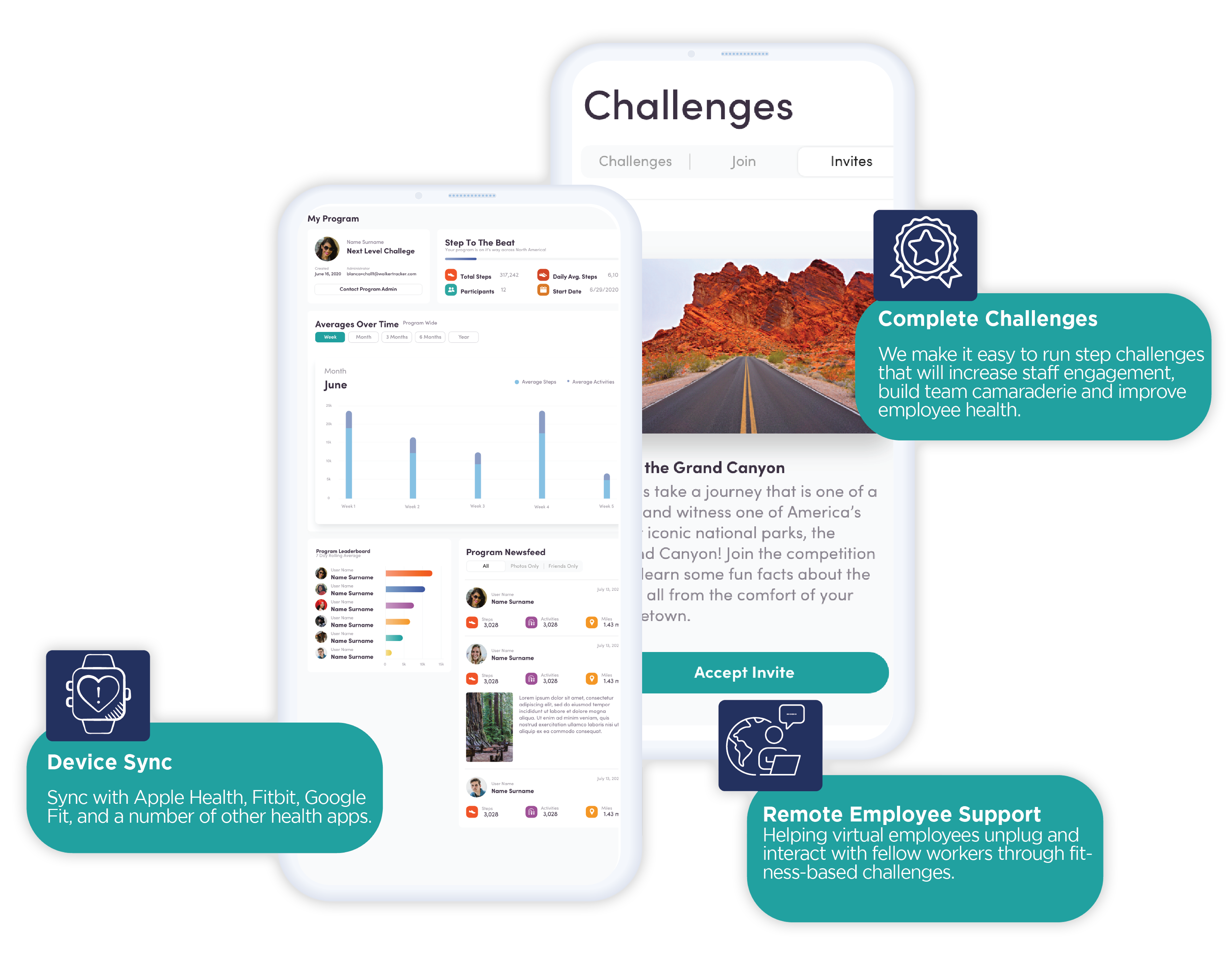
We couldn’t agree more! We know some people who have a fantastic walking program program for corporate wellness.

100 steps a minute is the new 10,000 steps a day

Wednesday, March 18th, 2009

100 steps a minute? Go!

St. Patrick’s Day saw the release of a fascinating pedometer-based study in the American Journal of Preventive Medicine.

A small group of researchers was interested in translating the public health recommendation that all Americans should engage in 2.5 hours of moderate activity each week into an easy-to-follow “pedometer-based guideline.”

After clipping pedometers to 97 adults and tracking their metabolic rates at different speeds of walking, the researchers came to the conclusion that walking 100 steps a minute, or 3,000 steps in half an hour, is an ideal pace to meet the guidelines. There were slight differences in exactly what the ideal rate was for men compared to women, and for overweight or obese persons compared to normal weight persons. However, the 100 steps a minute rate is accessible and easy to remember for all, and, the study concludes, close enough for all groups of people to be effective in reaching the goal.

The study was performed on treadmills, which I had long heard were not as beneficial as just plain walking outdoors, but the paper takes pains to lay my qualms to rest, saying, “evidence does suggest that walking on a treadmill and walking overground are kinetically and kinematically equivalent in healthy subjects.”

I took a look at the chart breaking all the proposed ideal step rates down into categories, and was a little surprised to see that though most of the categories did fall into the “approximately 100 steps a minute” range, under one of the three analyses available, adults of “normal weight” would more likely benefit from walking at a pace of 127 steps per minute.

I know that I’m going to dig up a watch with a second hand and go for a walk today after I finish planting tulips. I’d like to see how fast it feels to walk 100+ steps a minute!

The full paper is available on the American Journal of Preventive Medicine’s website. Its complete title is: Translating Physical Activity Recommendations into a Pedometer-Based Step Goal: 3000 Steps in 30 Minutes

Tracking my walks

Monday, March 16th, 2009

The sky is gray with strips of frothy sunset. The waves are being sucked back down the sand, every lash onto the beach falling lower than the one before it. I don’t know what’s in front of us, and the mystery pulls me forward, every step a comforting rhythm. I am three years old.

“You would walk for miles,” my mom tells me. “We would go to the beach, and you would walk and walk and walk. You never wanted to turn back. You never wanted to be carried.”

Years have passed since then. Decades, even. And though my love for walking has never subsided, my opportunities have. I have a child of my own now, and I remember learning, sometime in the hourless days of his infancy, that 10,000 steps — any kind of step, from carrying groceries to pacing a room with a sleepy baby, to running for the bus to getting dressed in the morning — was the magic number: A baseline for optimal health. Get a pedometer, I was advised. It counts your steps for you, so you can be sure. Maybe sometimes you’ll need to walk around the block just one more time, the way during your pregnancy you would have a spoon of peanut butter at night, for the protein quota. I got a pedometer, from somewhere, and clipped it to my waistband. It didn’t work. It reset itself to zero at the slightest jostle. I dropped it and the batteries rolled out. It didn’t count my steps. Oh well, I said to myself. I’ll just keep taking stairs instead of elevators and parking at the far end of the parking lot. I’m sure I walk 10,000 steps a day.

That was almost five years ago. When Ben asked a few weeks ago if I’d be interested in writing for this website, I was inspired to formalize my walking once again. I’d get a pedometer, a good one this time (Ben sent me the Omron HJ-112), and though I’m still figuring it out, it is about a million times better than that old translucent blue one with the unreliable battery door.

So I’ll be blogging here now, combining two of my great loves — writing and walking — keeping my eye out for interesting, informative, cool walking stories for you to read, and tracking my own progress.

I always welcome comments and questions, so please don’t be shy about contacting me, either through comments here or at my email address: robin@walkertracker.com.

Counting every step motivates you to take long walks, even if you don’t count how long your walks are

Tuesday, November 27th, 2007

It’s good to talk long walks – and some pedometers count those steps specially. A recent U of Michigan study suggests (as much as any study under controlled conditions suggests the truth, which may be different for you) that counting every step makes you happier than only counting the aerobic steps. The key quote:

In other words, a lifestyle group participant would have her steps counted whether she went for a half-hour walk or just walked outside to get the mail, while the structured group would only have the half-hour walk counted. But in both groups, the increase in the daily totals came from activities like half-hour walks, not by taking more short trips to the mailbox, to and from the car, or visiting a co-worker down the hall.
Reference: “A randomized trial comparing structures and lifestyle goals in an internet-mediated walking program for people with type 2 diabetes,” International Journal of Behavioral Nutrition and Physical Activity, 4:59 (Nov. 16, 2007). www.ijbnpa.org/content/4/1/59 as cited in a UMHS press release Pedometers motivate people with diabetes to walk more.

(as noted by Edward Vielmetti)

Technorati Tags: , , , , , , ,